Murph Guitars - the History
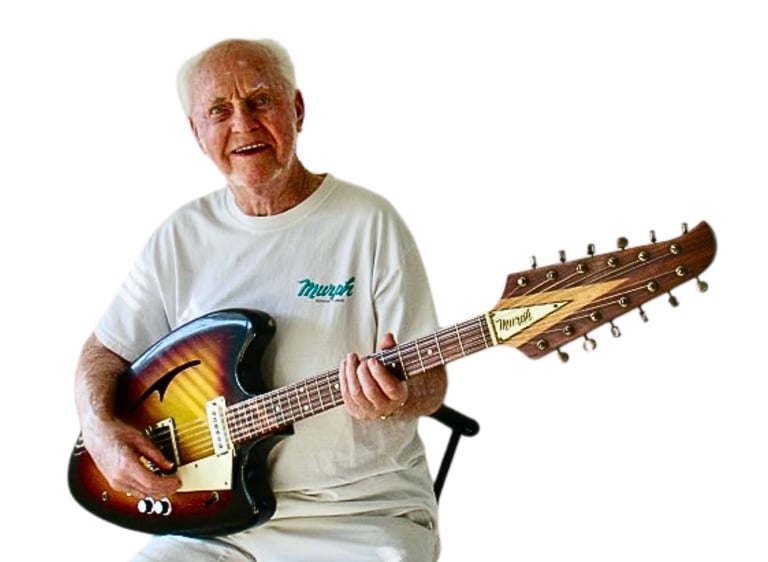
Thomas Patrick 'Pat' Murphy was born on July 8, 1920 in Springfield, Illinois and raised in Detroit, Michigan. As a young man he served as a naval air force mechanic in the Pacific during WWII. When finally discharged, he worked in various occupations and industries over the next 15 years, marrying, moving to California and raising a family in the process.
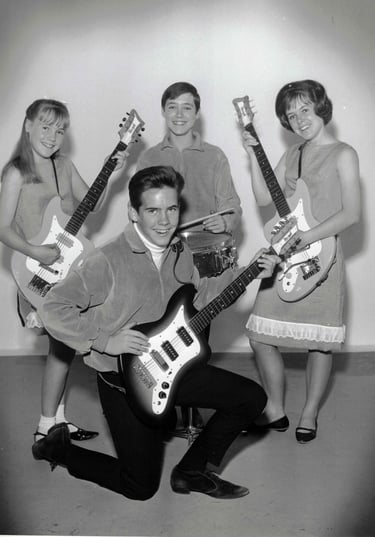
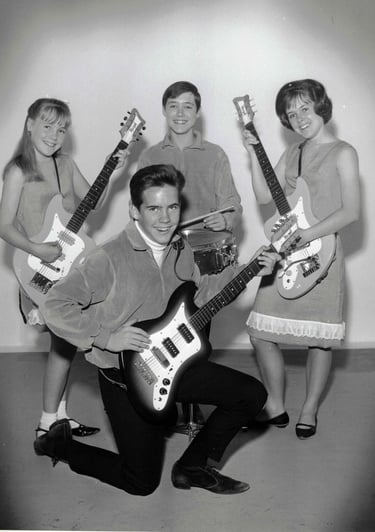
Pat was not musical, but his five children were. They were also actors and did television commercials, live T.V. shows, and theater plays in Los Angeles throughout the 1960's.
Pat's two eldest boys, Mike and Terry, were learning to play guitar. Their music teacher Jim Gurley, suggested Pat consider making a new line of guitars and allow his kids to help promote them. A self confessed 'jack of all trades', Pat and family embarked on a bold entrepreneurial enterprise - to build a quality guitar aimed at teenage musicians and designed to rival the more expensive American made instruments.
The Guitar Factory
To the end, 'Murph' had clear recollections back to those days when he was a builder of 'Top quality American made guitars'.
My thanks go to the ENTIRE Murphy clan without whom this history would have been lost forever ....we hoped you enjoyed the trip!
Cheers, Dan ( Sydney, Australia 2010 )
© Copyright Dan McGonigal & Murph Guitars, 2006 / 2010 - All Rights Reserved.
Thomas Patrick Murphy passed away in November 2009.
Pat's two eldest boys, Mike and Terry, were learning to play guitar. Their music teacher Jim Gurley, suggested Pat consider making a new line of guitars and allow his kids to help promote them. A self confessed 'jack of all trades', Pat and family embarked on a bold entrepreneurial enterprise - to build a quality guitar aimed at teenage musicians and designed to rival the more expensive American made instruments.
At that time, the rock and roll era was exploding. It seemed as though every teenager wanted a guitar or was in a garage band. Pat's kids were also interested in this new revolution. Mike played in bands with high school and college friends. Terry and Tim started the Murph Jr.'s with neighborhood friends. The boys, along with their sisters, Patty and Noreen, continued their singing and dancing act as The Murphys, (who were similar to the Osmond's or the Jackson 5 of their time) which included live stage and television performances, as well as a recording session.
To supply this new guitar craze many new U.S. companies started building guitars. Soon, seemingly everyone from record companies like Decca, to department stores like Sears & Montgomery Ward began selling guitars under their own brand names. Then, a flood of imported Japanese made guitars like Yamaha, Goya, Teisco & Kawai made their way into the American market. With all of these local & overseas companies trying to either maintain or gain a share of the guitar sales market, the competition was fierce when Murphy Music Industries started into business.
In February 1965, Murphy Music Industries commenced operations in a 1200 square foot leased building located at 1817 First Street in the industrial area of San Fernando, California. The building was modified to include a main reception/office area, a woodworking shop/sanding area, a separate paint booth, and a final assembly/inspection/shipping room - a lot squeezed into a moderate space.
The guitar factory in San Fernando as it looks today. Nothing much has changed in the last 40 years.
A local engineer, Rick Geiger, was employed to set up and run the production facility. He had a lot of experience as an expert builder of stringed instruments and brought those skills to the company.
Most of the woodworking machinery was picked up by Pat and Rick at auctions, including planers, a pin router, band saw, and belt sanders. Other equipment purchased were a fret cutting machine (affectionately called a gang - groover), along with many other more specialized machines such as a coil winder for the pickups, which were encased in locally made plastic covers.
To get the production started, Rick began creating the process by which all 'Murph' guitars would be made. Each step needed a jig or fixture to hold the guitar body or neck while cutting, drilling or routing them. After that there was a lot of hand shaping, gluing and sanding to be done. Each phase involved many steps, from the woodworking to the painting (10 coats) all the way to the final assembly. Each step was planned carefully to minimize the amount of labor involved.
Raw materials such as poplar for the bodies and maple for the necks were purchased from Penberthy Lumber Company in Los Angeles; but the rosewood for the fretboards, as well as the bridges, tailpieces and tremolos, were imported from C.A. Gotz in Germany. Other hardware, as well as the electronics, Kluson Deluxe machine tuning heads, and strings were U.S. made and purchased locally. Victoria Luggage Company in Los Angeles supplied the guitar cases.
There was a minor setback in the early months of research and development in 1965, when Rick Geiger suddenly left the company under difficult circumstances. Pat had to very quickly pick up where Rick left off and begin production as soon as possible. Much money had already been invested without seeing a finished product.
Initially, there were several main shop woodworkers; 3 in the paint booth, who also doubled as sanders; 4 in the final assembly section; (including Mike Murphy, Pat's eldest son) a couple of office workers (including Mary Jane, Pat's wife, and daughter, Patty) and a salesman. At the peak of production, there were as many as 22 people working at Murphy Music Industries. The company was able to produce guitars in lots of 50 at a time; and in good weeks occasionally twice that number were produced.
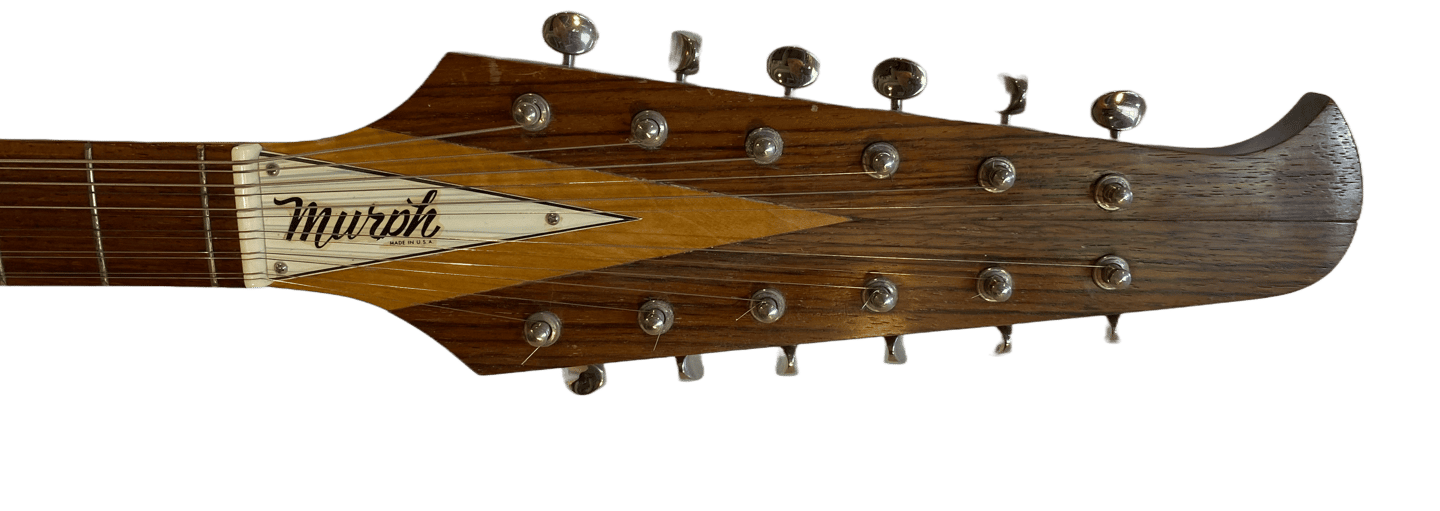
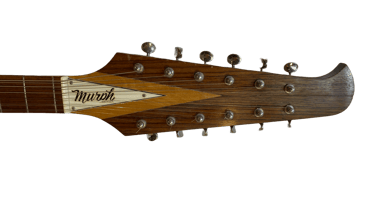
Originally the guitar was named a 'York', but a brass instrument maker of the same name already existed in Grand Rapids, Michigan. So by shortening his own surname, Pat settled on 'MURPH', a one syllable name that wasn't difficult to remember.
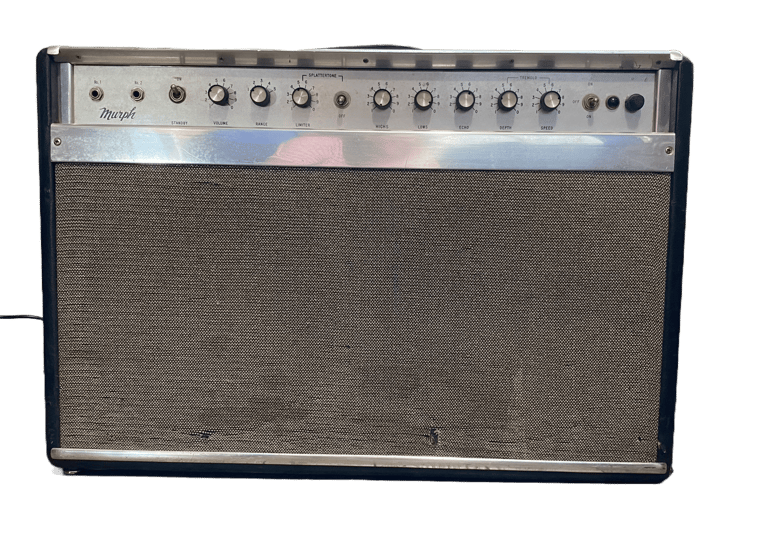
During that year and into early 1966, rapid progress was made with single and multi-pickup, solid body guitars, and amplifiers. In the summer of 1966, the company went to the National Association of Music Merchants (NAMM) show in Chicago to showcase their now almost complete range of products.
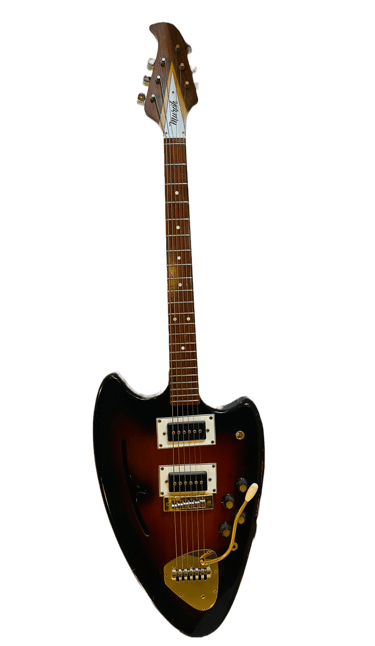
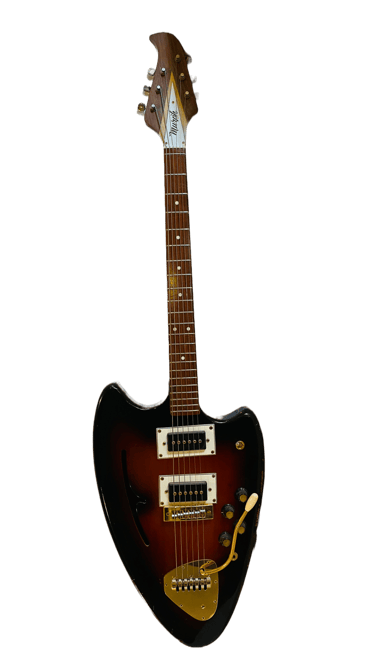
In addition to these, either in final prototype development or in the early stages of production, were an acoustic guitar, a new 'heart' shaped design, a big bodied semi-hollow model and a 'build your own guitar' kit. There was even a half sized, portable, 6v battery-powered toy guitar that had an amplifier which doubled as the guitar stand. During development, everyone at the factory referred to it as the 'baby Murph'. Mattel Toy Company thought it was a good idea and showed interest.
At the same time all this was happening, an agreement was being negotiated with Sears to have Murphy Music Industries make guitars under their brand name of Silvertone. This was thought to be a sales boon for the company - but at that time, Sears ended up ordering less than 25 guitars, because they had already used what was left in their yearly budget for their 'Silvertone' purchases. However, Murphy Music Industries got a promise that a larger order would follow the next year.
Basically, Murphy Music Industries was like any small business working on a shoestring budget with high hopes and strong determination. Creating such a wide variety of models and options in just under two short years ( and the expense of having 22 employees )plus money being poured back into the company, along with lines of credit being stretched to the limit, was a real strain for this small California company. Unfortunately, it meant the business was about to face its biggest challenge yet.
Upon returning from the NAMM convention, Murphy Music Industries received a 'cease and desist' letter from a major U.S. guitar manufacturer alleging patent infringement on the design of some of their guitars. The thought of halting production for one or two years while going through litigation was more than the company could afford while proving there was no validity to the claim. Also, after receiving orders of Murph guitars on consignment, many music stores were starting to return them. Pressure was being brought to bear by the big players!!
Murphy Music Industries soldiered on into early 1967 but it was inevitable that these insurmountable pressures and the resultant lack of sales would cause the company to become insolvent. They sadly filed for bankruptcy around March/ April of 1967.
After the demise of the guitar business, Pat started a mobile catering company, serving the needs of construction workers at building sites and factory workers - a world away from building guitars. This successful venture saw him through until retirement in the mid 1990's.